

Tankless vs. Tank Water Heater: Which Is Right for Your Home?
Your Tankless vs. Tank Water Heater decision should reflect your household’s routines, available space, and installation budget.
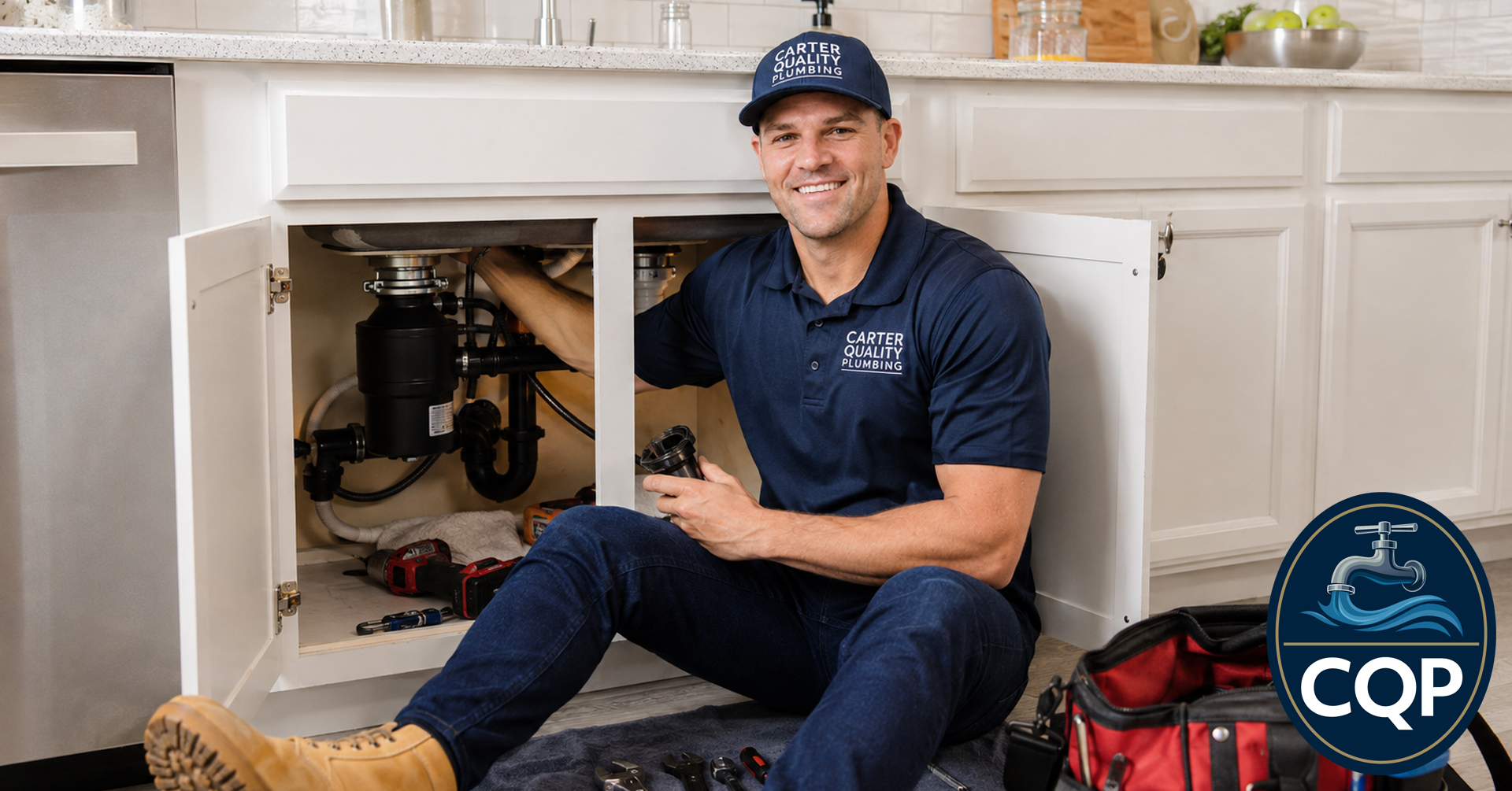


If a drain is slow or keeps backing up, the first step is understanding the pattern. Is it one sink, several fixtures, or a problem that returns soon after the line has been cleared?
At Carter Quality Plumbing, our team starts with questions about the home and its plumbing history. That helps us choose a sensible next step instead of assuming every slow drain needs the same fix.
When you call, these details help us understand what has been happening:
You do not need to know every answer. Tell us what you have noticed. An earlier inspection or a history of repeated cleanings can be useful when we assess the line.
If a kitchen sink is slow but the bathroom fixtures drain normally, we start by looking at the affected fixture and its connected drain. Grease, food debris, hair, and other material can contribute to clogs, depending on the fixture.
That does not mean the blockage must be right below the drain opening. The trap, branch piping, and the way the drain is installed can all matter. We assess accessible connections and choose an access point and cleaning method based on what we find.
A toilet flushing and causing water to rise in a nearby shower is useful information. So is a backup affecting several fixtures. That pattern may point to a shared branch or sewer line, but it does not tell us the exact location or cause by itself.
If wastewater is backing up, stop using the affected fixtures and contact a plumber. Continuing to run water can add to the backup. Let us know where the water appears and which fixture was running when it happened.
A line that clears and then backs up again needs more context. How long did the cleaning help? Has this happened since you moved in? Was the sewer inspected before? What piping is in place?
Recurring clogs can involve buildup, material entering the drain, or an existing pipe condition. A broken or sagging pipe will not be corrected by cleaning alone. Clearing a blockage and finding out why it formed are related, but they are different parts of the work.
A camera inspection can help us see the accessible inside of a drain or sewer line. Depending on the access and visibility, it may help explain recurring blockages or identify pipe conditions that deserve attention.
We discuss whether inspection would be useful for the problem you describe and what the proposed work includes. A camera is an inspection tool; it does not clear a clog or repair a pipe. The line may need to be cleared before we can get a useful view.
Drainage also depends on the plumbing arrangement and venting. Gurgling or slow drainage can have more than one cause, so those symptoms alone do not prove that a vent or mechanical vent has failed.
Our team checks whether a venting issue could be contributing to the problem, along with the drain and the surrounding installation. Adding or replacing a vent is not a substitute for identifying a blockage, and cleaning alone will not correct every installation problem.
We explain the proposed cleaning scope, access, and price before approved work begins. If a fixture needs to be removed for access, or further inspection or repair is recommended, we explain that too.
After cleaning, we test drainage where possible and discuss any remaining concerns. We want you to understand whether the work restored flow and whether there is evidence of a condition that could cause another backup.
Brian or a member of our team can assess slow drains, recurring clogs, and backups in Annapolis, Edgewater, Arnold, Severna Park, West River, and surrounding Anne Arundel County communities.
See our drain cleaning service or request a free estimate. Tell us which fixtures are affected and what you know about the home’s plumbing history so we can help you understand the next step.
Updated October 4, 2026, with diagnostic input from Brian Carter, owner and Master Plumber at Carter Quality Plumbing.