

What Causes Low Water Pressure Throughout Your House?
Learn why low water pressure can affect your entire house, what to observe, and when to call Carter Quality Plumbing.
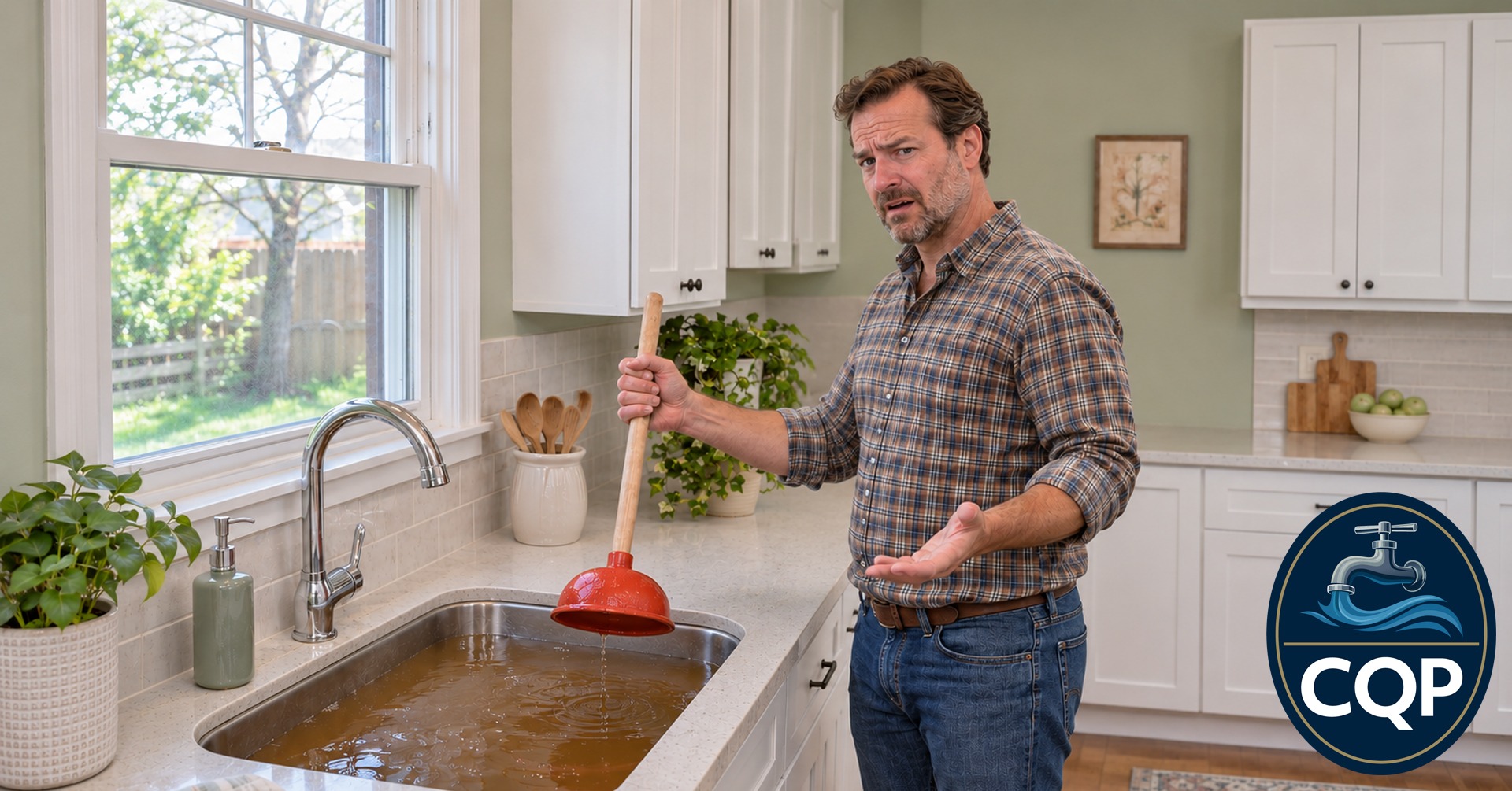


Multiple Slow Drains can signal a shared plumbing problem, especially when fixtures in different rooms struggle together. Instead of treating each sink separately, consider how your home's drainage connects.
You don't need to diagnose the problem yourself. However, recognizing the pattern helps you explain what's happening and know when professional attention matters.
A single slow bathroom sink often points toward buildup around its stopper, trap, or nearby drainpipe. If your shower, toilet, and other sinks work normally, the problem may stay close to that fixture. However, slow drains across several rooms suggest checking the piping those fixtures share.
Your home's smaller drainpipes connect to larger branch lines and eventually the main drain. A blockage beyond those connections can affect several fixtures at once. That doesn't automatically mean your entire sewer line needs replacement. Sometimes, separate fixtures also develop unrelated clogs, so an inspection matters.
Consider the timing, too. Two bathrooms slowing down together suggest a different pattern than unrelated problems developing months apart. Share that timeline when you call.
Everyday materials can gradually reduce the space available for wastewater to pass through. Kitchen grease can collect inside pipes and trap food particles. Meanwhile, hair combines with soap residue in bathroom drains, creating stubborn obstructions.
Foreign objects create another problem. Wipes, paper towels, hygiene products, and small toys can lodge inside pipes rather than pass through. Even wipes labeled flushable can contribute to sewer blockages.
Buildup near one fixture typically affects that location first. However, material collecting farther along a shared pipe can interfere with drainage from multiple rooms.
The main drainage route carries wastewater away from your home toward a public sewer or private septic system. When a blockage restricts that route, wastewater cannot leave normally. Consequently, using one fixture may cause water to back up through another.
For example, laundry discharge might appear in a nearby floor drain. A toilet flush could also send water into a shower. These interactions suggest a problem beyond the fixture where you notice water. Grease and foreign materials aren't the only possibilities. Roots entering damaged joints, broken piping, or sagging sections can also obstruct drainage.
Multiple Slow Drains deserve closer attention when gurgling, recurring odors, or unexpected water movement accompany them. Listen for bubbling toilets or drains that make noise while another fixture empties. Notice whether the same problem returns shortly after someone clears a drain.
However, sounds and odors alone don't identify the exact cause. Venting problems can also affect drainage, while other plumbing issues can allow sewer odors indoors. A plumber considers these clues together rather than assuming every symptom means a major sewer repair.
Homes using septic systems need an evaluation that considers more than the indoor drainpipes. Slow drainage could involve the house sewer, tank connections, an outlet filter, or the drainfield. Systems with pumps may also develop equipment problems.
Tell your plumber that your home uses septic and share available maintenance records. Additionally, mention sewage odors outdoors, unusually wet ground, or standing water near the system. A septic professional may need to assess components beyond the house plumbing.
Avoid assuming that pumping the tank will solve every problem. Clearing an indoor drain won't correct a failing drainfield either.
Reaching for another bottle can delay finding the actual cause. Chemical cleaners cannot repair damaged piping, and some products may harm incompatible materials or compromised pipes. Their corrosive ingredients can also cause serious burns.
Never mix drain cleaners with other cleaning products. If chemicals remain in a blocked drain, don't plunge it or add another product. Instead, tell your plumber exactly what you used and when. That information helps them plan the work around potential splash and exposure hazards.
Write down which fixtures drain slowly and when the problem started. Note whether symptoms appear together or follow laundry, showers, or toilet use. Photos of visible backups can help explain the situation without opening any plumbing.
Don't repeatedly run water to reproduce a backup. Leave cleanout caps and septic covers closed, and avoid dismantling connected pipes. Your observations should help identify the pattern without creating additional mess or exposure.
Diagnosis starts with the affected fixtures, the home's drain layout, and accessible inspection points. Your plumber uses that information to narrow down whether the restriction involves a fixture, branch line, or main drain.
Depending on access and conditions, a camera inspection may help reveal roots, obstructions, or damaged piping. Your plumber may recommend further inspection when clogs recur or signs suggest an underlying pipe defect.
Next, the plumber selects equipment suited to the pipe and blockage. A drain cable or auger may remove or break apart the obstruction. Other cleaning methods may suit certain lines, but pipe condition matters. Afterward, drainage testing helps confirm results and identify concerns that need further attention.
Contact a professional promptly when wastewater enters your shower, rises through floor drains, or threatens to overflow. Stop using water, including toilets, laundry equipment, and dishwashers, until someone evaluates the problem.
Keep children and pets away from contaminated areas. Avoid contact with wastewater, and arrange professional cleanup when sewage affects your home. For suspected public sewer problems, notify your wastewater utility as well.
Carter Quality Plumbing helps homeowners throughout Annapolis and Anne Arundel County understand and address drainage problems. Founder Brian Carter brings Master Plumber experience and local roots to our family-focused business. We explain the findings and discuss drain cleaning options before work begins. You'll understand the proposed approach before deciding how to proceed.
Our team also handles plumbing leaks, fixture repairs, water heater replacement, and well tank concerns. For Multiple Slow Drains, call Carter Quality Plumbing at 410-705-2589 to discuss your symptoms and schedule service.